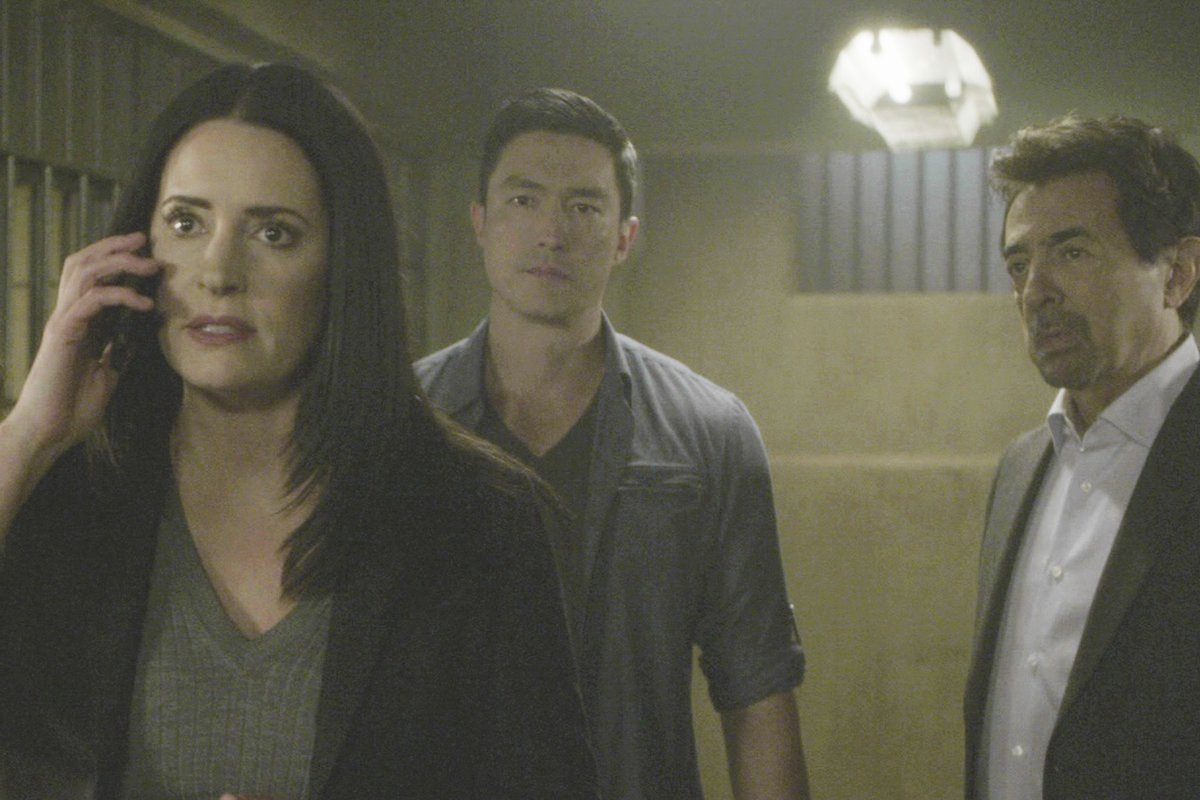
Season 13 of Criminal Minds didn't just pick up where its predecessor left off; it barreled into uncharted, high-stakes territory, forcing the BAU team to confront their deepest fears and the most ingenious, depraved minds yet. If you're ready to revisit every heart-pounding moment, every meticulously crafted profile, and every chilling Unsub, you've come to the right place. This comprehensive guide will walk you through each twisting case, character struggle, and overarching narrative that made Season 13 an unforgettable chapter in the Criminal Minds saga.
From the explosive conclusion of a long-running antagonist to the introduction of new team dynamics and deeply personal struggles, this season truly put the Behavioral Analysis Unit through the wringer. Let’s dive into the darkness and dissect every case that kept us on the edge of our seats.
Season 13 at a Glance: Your Quick Briefing
Before we delve into the nitty-gritty of each investigation, here’s a snapshot of what made Season 13 stand out:
- The Hunt for Mr. Scratch Concludes: The season opens with the harrowing resolution of the hunt for Peter Lewis, aka Mr. Scratch, a master manipulator who terrorized the BAU for two seasons.
- Matt Simmons Joins the BAU: Former International Response Team (IRT) agent Matt Simmons officially integrates into the BAU, bringing his unique skills and family-man perspective.
- Deep Dives into Character Backstories: Several episodes explore the personal lives and past traumas of beloved characters, particularly Garcia and Rossi.
- Navigating Bureaucratic Hurdles: The team faces new challenges from within the FBI itself, adding a layer of internal conflict to their external hunts.
- A Balance of Standalone and Arc-Driven Cases: While many episodes feature distinct Unsubs, underlying character development and thematic threads connect the entire season.
Kicking Off with a Bang: The Aftermath of Chaos
Season 12 concluded with a literal bang, leaving the BAU team in peril. Season 13 wastes no time plunging viewers back into the immediate, terrifying aftermath. The opening arc not only wraps up a significant plotline but also sets a somber, determined tone for the episodes to follow, highlighting the resilience and unwavering dedication of the profilers.
The Intense Pursuit: Episodes 1-3
The initial cases are a testament to the team's ability to compartmentalize personal trauma and focus on the monstrous tasks at hand, even when the wounds are still fresh.
Episode 1: "Wheels Up"
The BAU team has a tighter than normal deadline to reach South Dakota, the last known whereabouts of Mr. Scratch. They must leave Quantico in 10 minutes. Emily Prentiss delivers the titular line for this episode: "Wheels up in 10." However, they run into trouble because the brainy supervillian has figured out how to keep the wheels of their Gulfstream jet from engaging. Will they survive a crash landing in the Badlands?
This episode is a masterclass in tension, immediately addressing the cliffhanger from the previous season. The urgency to locate Mr. Scratch, coupled with the immediate life-threatening situation of a sabotaged plane, pushes the team to their absolute limits. It's a gripping opener that reminds us just how personal the stakes have become for the BAU. The successful, albeit harrowing, conclusion of the Mr. Scratch saga leaves a lasting impact on the team, particularly on Prentiss, who has carried the burden of leadership through this dark period.
Episode 2: "To a Better Place"
The BAU investigates three similar crimes in which victims' remains are discovered in old suitcases.
With the immediate threat of Mr. Scratch neutralized, the BAU tries to return to a semblance of normal, but the cases are anything but. This episode presents a chilling puzzle: the macabre discovery of human remains in such a common, unassuming container. It forces the profilers to consider highly specific Unsub motivations, often linked to control, dehumanization, or a bizarre form of preserving memories, pushing them to dissect the symbolic meaning behind the choice of a suitcase.
Episode 3: "Blue Angel"
When successful businessmen in Detroit are targeted by an anger-driven power-assertive Unsub, the BAU is called in to investigate.
Detroit sets the stage for a case rooted in classic power dynamics and suppressed rage. The Unsub's choice of successful businessmen points to themes of resentment, perceived injustice, or a desire for dominance. The team must delve into the psychology of assertion, understanding how anger can escalate into a deadly need for control and recognition, often stemming from personal feelings of inadequacy or emasculation.
Delving Deeper into Darkness: Mid-Season Cases
As the season progresses, the cases become more varied, exploring the dark corners of technology, community secrets, and the depths of personal trauma. Each investigation peels back another layer of human depravity, challenging the BAU's understanding of motivation and method.
Technology, Trauma, and Twisted Minds: Episodes 4-7
Innovation isn't always a force for good, and sometimes, the most profound traumas manifest in the most brutal ways.
Episode 4: "Killer App"
The BAU investigates a workplace shooting committed by a state-of-the-art drone in Silicon Valley.
This episode is a stark reminder of how rapidly technology can be weaponized. A drone, designed for efficiency, becomes an instrument of terror, posing unique challenges for the BAU. They must not only profile the human behind the controls but also understand how a remote, seemingly impersonal weapon can be integrated into an Unsub's violent fantasy, potentially stemming from feelings of powerlessness or social isolation in a highly competitive environment.
Episode 5: "Lucky Strikes"
Morgan lends emotional support to Garcia when she experiences anxiety over a case that is personal to her from her past.
This is a powerful, character-driven episode that shines a spotlight on Penelope Garcia. When a case triggers deep-seated anxiety related to her own past trauma, the familiar comfort and unwavering support from Derek Morgan (via phone) become a lifeline. It's a poignant exploration of how even the most resilient profilers carry their own scars, and how crucial their internal support system is, both on and off the job. Garcia’s vulnerability here humanizes the team further, showing the toll their work takes.
Episode 6: "The Bunker"
Several women go missing in Virginia and the BAU must figure out what they all have in common in order to find them.
The classic missing persons case gets a chilling twist, requiring the BAU to meticulously search for subtle connections between seemingly disparate victims. The concept of a "bunker" often implies isolation, control, and a long-term plan, leading the profilers to consider Unsubs who operate with extreme secrecy and possess a profound need to dominate, possibly creating an alternate reality where they hold absolute power over their captives.
Episode 7: "Dust and Bones"
The BAU searches for an unsub in Austin, Texas, who is targeting prominent members of the community.
Austin, Texas, known for its vibrant community, becomes the backdrop for a series of targeted killings. When an Unsub specifically singles out prominent figures, the BAU looks for motivations tied to status, perceived injustice, or a desire to dismantle social structures. This could stem from a profound sense of disenfranchisement or a narcissistic need to prove superiority by bringing down those in positions of power.
Sensationalism, Conspiracies, and Puzzling Past: Episodes 8-11
The team grapples with Unsubs who exploit media, operate under the veil of elaborate theories, or are driven by deeply buried, unresolved histories.
Episode 8: "Neon Terror"
When an UnSub in Miami sensationalizes his crimes by giving the local media exclusive footage, the BAU is called in to investigate.
In the flashy setting of Miami, an Unsub's thirst for notoriety takes a dangerous turn as they actively engage with the media. This behavior immediately signals a narcissistic or grandiose personality, driven by a profound need for attention and validation. The profilers must analyze the Unsub's chosen medium, the specific content they release, and how they perceive their own "performance" to understand the twisted narrative they are trying to construct and control.
Episode 9: "False Flag"
When two members of a conspiracy group in Roswell, N.M., perish in quick succession, the BAU is called to investigate.
Roswell, New Mexico, a town synonymous with UFOs and secret government plots, provides a unique backdrop for this case. The deaths within a conspiracy group force the BAU to navigate a world of paranoia, distrust, and alternative realities. The challenge lies in determining whether the Unsub is an outsider exploiting the group's beliefs, an internal member acting on their own warped ideology, or if the "conspiracy" itself is merely a convenient cover for a more personal, grounded motive.
Episode 10: "Submerged"
When a series of backyard pool homicides are reported in California, the BAU team searches for an UnSub with a puzzling past.
The seemingly idyllic setting of backyard pools becomes a chilling crime scene. The choice of water as a weapon or a disposal method often holds symbolic significance for an Unsub, perhaps related to purification, rebirth, or a profound emotional void. The "puzzling past" suggests a history of trauma, neglect, or a significant event connected to water that shaped their violent tendencies, making the profilers delve into deep psychological waters.
Episode 11: "Full-Tilt Boogie"
The BAU team’s investigation into the home invasion and attempted homicide of a police chief’s wife uncovers a world of secrets in a small town in Virginia.
Small towns often harbor the darkest secrets, and this episode exemplifies that. When the wife of a police chief is targeted, the investigation immediately raises questions of internal corruption, personal vendettas, or a desperate attempt to silence someone. The BAU must carefully peel back the layers of community loyalty and hidden agendas, where everyone knows everyone, but no one truly knows what lies beneath the surface.
When the Personal Becomes Professional: Character Arcs and Escalations
Season 13 isn't just about the cases; it's about the people solving them. This section highlights episodes where personal stakes are high, existing relationships are tested, and new challenges emerge that force the team to adapt, often in secret.
Cryptic Clues and Mass Graves: Episodes 12-15
The BAU faces a range of complex cases, from enigmatic messages to disturbing discoveries, while also confronting internal challenges to their operational autonomy.
Episode 12: "Bad Moon on the Rise"
The BAU is called to New York when several casualties of a brutal nature are reported in Central Park.
Central Park, a green oasis in a bustling city, becomes the hunting ground for a brutal Unsub. The nature of the crimes often suggests a primal, uncontrolled rage or a highly ritualistic pattern. The team must navigate the complexities of urban anonymity while also considering how the natural environment of the park might play into the Unsub's fantasy or chosen methodology, perhaps seeking a sense of escape or dominance over a crowded populace.
Episode 13: "Cure"
The BAU is called to investigate a series of D.C. homicides where cryptic messages are found inside the mouths of each victim.
Cryptic messages are a profiler's goldmine, but also their greatest challenge. When messages are physically placed inside the victims' mouths, it signifies a profound need for the Unsub to communicate, control the narrative, or symbolically silence their victims even in death. The team must decipher not just the words, but the ritualistic placement and the Unsub's twisted perception of "cure" or redemption.
Episode 14: "Miasma"
The BAU is called when the New Orleans P.D. discovers a mass grave inside a vandalized above-ground crypt in a local cemetery.
New Orleans, with its rich history and unique burial practices, provides an incredibly atmospheric setting. The discovery of a mass grave within a vandalized crypt immediately points to an Unsub with a profound disregard for the dead, possibly linked to religious fanaticism, occult beliefs, or a deep-seated contempt for tradition and reverence. The team must disentangle the cultural significance of the location from the Unsub's personal pathology.
Episode 15: "Annihilator"
The FBI's assistant director of national security, Linda Barnes, joins the BAU as they investigate a quadruple homicide of a group of roommates in St. Louis.
This episode marks the unwelcome arrival of Linda Barnes, an antagonist from within the Bureau itself. Her presence immediately adds a layer of bureaucratic tension and oversight, forcing the BAU to navigate political pressures while simultaneously investigating a brutal quadruple homicide. The focus on roommates suggests either a targeted attack on the group dynamic or a highly personal vendetta against one that spiraled to include all.
Under the Radar and Unexpected Visitors: Episodes 16-19
The team's ability to operate is tested, forcing them to find creative ways to pursue justice, while personal histories resurface, adding new dimensions to their already complex lives.
Episode 16: "Last Gasp"
Away from the watchful eye of the FBI's assistant director of national security, Linda Barnes, the BAU meets in secret to investigate an UnSub who appears to be kidnapping and photographing young women.
Linda Barnes’ interference reaches its peak, leading the BAU to operate in secret – a testament to their unwavering commitment to justice over procedure. This "off-book" investigation is thrilling, showcasing the team's loyalty and ingenuity. The Unsub's pattern of kidnapping and photographing young women suggests a highly organized, ritualistic individual driven by control, collection, and perhaps a twisted desire to immortalize their victims in a specific, objectifying way.
Episode 17: "The Capilanos"
The BAU is called to Oklahoma to investigate a murderous clown terrorizing the sleepy town of Guymon.
Few tropes are as unsettling as a murderous clown, and this episode leans into that inherent fear. The juxtaposition of a sleepy town with such a grotesque and theatrical Unsub creates a powerful sense of cognitive dissonance. The profilers must look beyond the costume to understand the person underneath, often someone who feels powerless and uses the mask to embody a terrifying persona, seeking attention, fear, or a sense of perverse liberation.
Episode 18: "The Dance of Love"
The BAU travels to Chicago to investigate an unsub who leaves red roses on each victim. Also, Rossi gets an unexpected visit from his ex-wife, Krystall Richards.
This episode weaves a particularly personal thread for David Rossi. While the team investigates a romanticized Unsub in Chicago, marked by the symbolic red roses, Rossi’s past unexpectedly reappears with a visit from his ex-wife, Krystall Richards. The Unsub's choice of roses points to a highly romanticized or obsessive nature, possibly stemming from rejection or a warped ideal of love. Meanwhile, Rossi’s personal life unfolding against this backdrop adds a poignant layer to the narrative.
Episode 19: "Ex Parte"
The BAU takes charge of a hostage situation at a law firm in D.C., where Matt Simmons’ wife, Kristy works.
The stakes skyrocket when the case becomes intensely personal for Matt Simmons. His wife, Kristy, being among the hostages in a D.C. law firm, forces the BAU to operate with extreme precision and emotional control. This scenario pushes Simmons to his limits, highlighting the delicate balance between his professional duty and his personal life. It's a tense, claustrophobic episode that showcases the team's crisis negotiation skills and their unwavering support for one another.
A Season of Unraveling: The Climactic Close
As Season 13 draws to a close, the cases continue to challenge the team both intellectually and emotionally. The final episodes set the stage for future narratives, leaving viewers with lingering questions and a sense of the ever-present darkness the BAU confronts.
Bio-Terror, Brains, and Beliefs: Episodes 20-22
The final arc of the season delves into global threats, unusual neurological targets, and a perplexing cold case that pulls Reid into a web of intrigue.
Episode 20: "All You Can Eat"
The BAU is called to investigate a series of deaths in Virginia suspected by the Center for Disease Control to be caused by bio-terrorism; Garcia visits her stepbrother to take care of a family issue.
This episode introduces the chilling threat of bio-terrorism, requiring the BAU to collaborate with the CDC on a case with potentially widespread implications. The investigation into a rapidly spreading, deadly agent forces them to profile not just the Unsub's psychological motives but also their scientific expertise and intent for mass destruction. Concurrently, Garcia’s personal visit to her stepbrother adds another layer of emotional complexity, highlighting the personal sacrifices the team makes for their calling.
Episode 21: "Mixed Signals"
The BAU is called to Taos, N.M. to investigate an UnSub who is targeting his victims' temporal lobes.
A highly specialized Unsub in Taos, New Mexico, presents a particularly disturbing case: victims are targeted specifically in their temporal lobes. This immediately signals an Unsub with advanced knowledge of neuroscience, potentially driven by a desire to control perception, memory, or even personality. The team must understand the profound psychological impact of such a targeted attack and the precise, intellectualized pathology behind it.
Episode 22: "Believer"
When Reid discovers former FBI Special Agent Owen Quinn locked inside a storage unit, the BAU questions the credibility of Quinn's bizarre accounts of searching for an UnSub that he named "The Strangler".
The season finale is a mind-bending puzzle, pulling Dr. Spencer Reid into a conspiracy surrounding a former FBI agent and an elusive Unsub. The credibility of Owen Quinn's story is central to the investigation, challenging the team to separate delusion from dark truth. This episode masterfully blends psychological mystery with the team's unwavering belief in uncovering the truth, no matter how convoluted. It's a powerful conclusion that hints at larger, unsettling narratives still to come for the BAU. To truly grasp the nuanced developments and the enduring impact of these cases, you might want to Explore Criminal Minds Season 13 in full, revisiting the episodes and seeing how each piece fits into the grand tapestry of this gripping season.
Beyond the Case Files: Why Season 13 Still Resonates
Criminal Minds Season 13 was a journey through the multifaceted layers of human darkness, but also a testament to the unyielding light of the BAU. It masterfully balanced standalone cases with compelling character arcs, proving that even after thirteen seasons, the show could still deliver fresh, impactful narratives.
This season highlighted the evolution of the team, the introduction of new members, and the personal battles fought behind the badges. It reaffirmed the show's core strength: its ability to explore the "why" behind the horror, giving audiences a deeper understanding of the criminal mind and the incredible dedication required to profile it. The tension, the psychological depth, and the emotional resonance are what make Season 13 not just another collection of episodes, but a vital chapter in the Criminal Minds legacy.
Your Guide to a Deeper Dive into Criminal Minds
Whether you're new to the BAU's world or a long-time fan seeking to revisit your favorite cases, this guide serves as your comprehensive companion to Criminal Minds Season 13. Every episode offered a unique glimpse into the abyss of human nature, challenging the profilers and viewers alike to confront unsettling truths.
Take this guide with you as you re-experience the intensity, the brilliance, and the emotional weight of each case. Pay attention to the subtle clues, the profiling insights, and the profound character developments that define this gripping season. There's always more to uncover when you look closely at the criminal minds.